Sunday, October 2, 2022

Manga: Gigant Vol 7

Content Warning: Nudity (duh at this point), suicide, demonic imagery, and exposition dumping.

Well, it’s been a while since I’ve done anything with this series (much less this blog) and since this series is going to be coming to a close this year, at least for the official translation, I thought I’d catch up. Let’s get started!

This volume begins with a bit of a slow opening, with some panels showing how Chiho and Rei are dealing with the fallout of their break up. Rei seems listless, but Chiho is working hard and trying to get acting roles. This culminates to a fake out. We think that Rei and Chiho, who have been crying, are about to experience a happy reunion, but it’s not him in her apartment, it’s the Future Weirdos.

After a bit of confusion, and a Doremon reference, we get an exposition dump about the Future Weirdos and what’s actually going on. You see, our Weirdos (who are a military unit) have come back in time from 2135, where the human population has dropped to 85 million, due a war with a pair of AIs. Created in 2019 by your favorite Evil Empire, Google, Plato and Socrates have loaded themselves on to a satellite and have built a super satellite from space junk. In the future, after studying humanity, these AIs will end up trying to destroy humanity, and so our Future Weirdos have come back to stop them. This explains the Terminator references in the earlier volumes.

Moving on a bit, we have the Future Weirdos teaching Chiho how to fly and do energy blasts. It also looks like one of the Future Weirdos is falling in love with Chiho… Poor slob.

Meanwhile, we have some cuts to Rei and some of the stuff that’s going on. The birds start falling out of the sky as Satan approaches. In addition, suicides are increasing the closer Satan gets to Tokyo. While Rei’s friends are fleeing Tokyo, his dad is committed to seeing how all this plays out. People are also starting to feel sick, too, including Chiho. But it’s not because of Satan that Chiho is feeling unwell. It’s because she’s pregnant. Yeah. That broken condom in the last volume has come full circle. We’ll be circling back to this in a minute, but first, I want to talk about something that happens before that. When Chiho gets home, before she takes the test, she catches two of the Future Weirdos watching some of her adult films. Getting embarrassed, she turns it off, but we linger on these two. From what they say, mating isn’t something that’s done in the future, and is even damaging. However, humans being humans, this leads the two of them to experiment a bit, and they end up leaning in for a kiss. I find this whole thing fascinating, as they’ve been showing how sex focused our modern society is. I’m not saying it is, but the lens of the series thus far as been sexual in nature. Look at our main characters: An AV actress and her number one fan, who’s a teenage boy. We’ve seen Chiho naked and performing sexual acts since the very first chapter. Rei and Chiho have had sex several times on panel. And let’s not forget that Chiho is naked when she grows larger and fights. I just thought this whole contrast to be interesting.

Anyway, moving on, we have Chiho telling Rei what’s going on. There’s a tearful reunion, with Rei being very happy to be a father, but also not wanting to be a leech on Chiho. It’s one of those things that’s going to be hard to figure out in the future, but we must wonder, do these two even have a real future?

There’s a funny little thing involving Mochi, Chiho’s dog in case you’ve forgotten. While the Future Weirdos are discussing what happened to the Captain’s (the guy who died and gave Chiho the wrist thing way back at the beginning) “time orb,” Mochi finds it and accidentally used it. Chiho is upset, as that dog has been her close companion during all of this, but the Weirdo’s reason that he’s only gone a few days into the future, so he’ll be okay. This is probably one of the weirdest things in this volume so far, but I do wonder how it’ll be important in the future. Because I have a hunch it will be.

Now, it’s time to bring this volume to a close with the arrival of Satan. As Satan gets closer to Tokyo, we start following Rei as he travels… Somewhere. I’m assuming he’s on the way to school. He starts seeing people throwing up. And then people jumping in front of subway cars. He makes his way to the streets, only to have people landing on the ground around him, having thrown themselves off of the tops of the surrounding buildings. Chiho calls him and he admits that he’s feeling suicidal, and can’t stop himself. Meanwhile, we see Rei’s mom about to slit her wrists, but his father comes home right in the nick of time and stops her. When it comes to Chiho’s side of the story, she hasn’t told the Future Weirdos about her being pregnant and one of them overhears her discussing it with her assistant or manager, they don’t say who this guy is. Anyway, when the Weirdos find out about her condition, they say they’ll handle Satan by themselves. When Chiho asks if they’ll be okay, they don’t really answer. When pressed, the one that’s kind of developing a crush on her assures her that they’ll be fine. Chiho doesn’t seem to believe him but doesn’t try to go with them. This is when she calls Rei and then she takes off to help save the world.

The volume ends with the Weirdos facing off against Satan, seen in full for the first time…

This volume is really where we see that the creator realized that he had to “wrap it up” so to speak and get on with the ending. Several questions we’ve had since the beginning of the series are answered in just a few pages. We’re also seeing things that could have been left for a while, such as Chiho’s pregnancy, being brought up so they can also be resolved, too. All in all, I rather enjoyed finally getting to know what is actually going on and getting things moving. Even if this feels rushed…

Rating: 4 out of 5
Suggestion: Pick it up, we’re almost done.

Sunday, April 10, 2022

Anime: A Silent Voice


Content Warning: Suicide attempts, kids being assholes, social anxiety and a very abridged story.

So… This is going to be an interesting review. Why? Well, it’s because it’s not as good as the manga. Thanks for coming by and hope you’ll read some more reviews!

Okay, okay, let’s talk about the movie, I guess. The movie begins with Shoya getting ready to kill himself. He takes all the money and gives it to his mom and then goes to a bridge and climbs on the railing and starts to fall. Only to be brought back to reality by a family lighting off fireworks. At this point, we go back to when he was a kid and in school. There’s a montage to establish who Shoya is with his friends and the rest of the kids in class. And then Nishimiya shows up. From here, Shoya starts to bully her, and the rest of students either quietly support him or stay out of it. They don’t like Nishimiya because she’s a “burden” to them and they’re having to adapt to her and they don’t want to. She’s “weird,” she’s “odd,” she’s “different.” And that’s never okay but they are kids. His bullying escalates and he hurts Nishimiya. After being confronted by the teachers, all of the kids blame Shoya for everything and he tries to defend himself by throwing the rest of them under the bus. Shoya’s mom has to pay Nishimiya’s mom for the hearing aids and then Shoya is bullied and exiled from friends.

We skip forward, back to where we were and Shoya tracks down Nishimiya to return the notebook. Again, she runs away and he follows her and talks to her using sign language. He apologizes. And then things start to change. He starts to change by helping out his classmate, Nagatsuka…

Okay, you know what? I can’t really do this review. Because I’ve already done this. It’s really hard to go over the plot of the movie when it’s the same as the manga, just missing some parts. Unlike a some others I can think of (Akira leaps to mind), it just tells the exact same story, with those same emotional beats, but a lot more quickly. There’s no movie subplot, which I think is a real shame. They also don’t give our various side characters any real character at all. In the manga, we really got to know these characters and understand them. In the movie, they’re just kind of there. And the ending is earlier on in the story than the manga but is still fairly good, it just doesn’t feel as powerful as the ending of the manga.

But I want to talk about what is good about this movie. One thing you don’t get in manga is sound. The movie uses sound and silence to great effect, as well as some powerful music. This is one of the best parts of the movie and I really enjoyed it. It also shows how someone who can’t hear can be alerted by other things. A very good example is when Nishimiya after Shoya is in the hospital and has a dream that he’s dying or has died. When she goes there and starts to cry, Shoya shows up, having had his own dream and finally woken up from his coma. When he goes there, he calls out to her but she can’t hear him. But he puts his hand on the railing to steady himself, which makes it move. Nishimiya feels this and realizes that he’s there. It’s subtle but works so much better in motion rather than panel by panel. There’s also a lot of visual cues about what’s going to happen with Nishimiya’s suicide attempt. The same sequence Shoya sees when he ends up saving her is shown when he thinks about killing himself at the start of the movie, again during the montage when he’s a kid and jumps off the bridge with his friends, and again when he jumps off the bridge after Nishimiya when her notebook is thrown into the river after he returns it. This same view of the water and the landing happens again and again, until he falls to what might be his death. There’s also several moments of Nishimiya and Shoya trying to catch each other’s hands when one of them falls. It’s not until that life is on the line that they’re able to connect. And that’s what this movie shows so well, is how Nishimiya and Shoya keep trying and failing to connect until the very end. It just adds to how visually well done the movie is. If you read the manga for the plot, you have to see movie for the visuals. It’s a true companion piece to the manga, as you’ll bring the full context from the manga with you when you watch it, making it so much better. Assuming you’re not like me and keep going “but what about this?” when they skip stuff or cut it short. Don’t be like me.

I feel that this movie is important. It’s about empathy and redemption. And we need that. It’s also not about the idealized or romanticized version of redemption we see in movies and media but the true reality of redemption. It’s a process, not an event. And it’s messy and it doesn’t always work the way to expect it to. You try and fail, try again and fail a bit better. And that’s what Shoya does. He tries and fails. Keeps trying and fails spectacularly, by driving everyone away with his mouth. But he isn’t there to succeed in the eyes of everyone else but in Shoko’s eyes. That’s all he cares about. And while redemption isn’t an event, you sometimes face a choice, when you have a chance to not undo your old mistakes but when you get a chance to show how you’ve changed and what’s really in your heart. And that’s what Shoya does: He is given a chance to do the right thing, to show what’s in his heart, and he does it. Without thinking, without stopping, he risks it all to save Nishimiya and it costs him. All this event really does to him is give him clarity. It doesn’t make him a better person in an instant but does give him perspective and a chance to be who he wants to be. To live up to the words he says.

And that’s why this is an important movie. There’s a lot of other reasons why this is important but it doesn’t matter why it’s important only that it is. I do find it interesting how I have a different perspective on Shoya compared to other reviews I’ve seen. When he tells everyone about their flaws or problems on the bridge when he drives everyone away, I don’t see it as some big thing. I see someone being honest about the people around them. He calls Miyoko a coward, because she is. She really is. But there’s nothing wrong with being a coward sometimes. And it seems to me that having someone call you out on your shit is a very important thing to have in your life. Perhaps I’m a terrible person like Shoya is. But I’d like to think that if I was put in the same situation that Shoya was in with Shoko, watching her starting to jump, I’d at least try to do the same thing. I don’t know.

Okay, I have to bring this to a close, otherwise, I’m going to go on and on about this topic and put my foot in my mouth. To sum up my feelings (not thoughts) on the movie, I didn’t think it was great. But it was good. And I want people to watch it. That’s why it’s my feelings, not my thoughts. Because emotions aren’t logical. Much like friendship.

Addendum: While I was in the shower, watching some video essays about this film, I realized a few things about this film and manga. I just realized that Shoya doesn't know where Miyoko ended up. He doesn't know anything about Naoko. But you know what he does know? What he doesn't have to ask anyone about? Where to find Nishimiya. Maybe he looked her up somehow but it's not shown on screen. We don't know how he knows but he does. I'm thinking he was keeping track of her, in some way or another, and that's why they didn't show it. And that shows how dedicated he is to changing. It's not perfect but it's a little thing that shows a bit more about him. Another thing that people have talked about is how bullies can change and the like. While I do agree that they can, the difference between some of these stories and Shoya's story is one key thing: He takes the effort to apologize, learn to communicate with Nishimiya directly, and then takes action on his apology. Sure, he didn't mean to try and be friends with her but he still said it and does it after he does. I've also realized that I am missing parts of the context in these things because I've never suffered anxiety to the degree that these characters do. I didn't become afraid when I had to deal with bullying, I got mad. And then I became depressed because I knew it was wrong to act on my anger. Anxiety, to some degree, is about fear. And I didn't feel the same fear I did with those. And while I was lonely, I was never really alone, like Shoya. I always had a friend or two for most of my life. They might not have been the best people and we might have grown apart but I still had someone to talk to. And that might be a key difference. And now I think it's time to finish this up, before I discuss more about myself.

Rating: 3 out of 5
Suggestion: While a good watch and good movie, it’s not as good as the manga. Watch it anyway.

Sunday, April 3, 2022

Other: The Complete Anime Guide - Japanese Animation Video Directory and Resource Guide

I don't have a picture for this one, so here's one show they talk about
 

Content Warning: Some very dated references and talking points

When you think about anime in America, most people I imagine are reading this probably grew up with Toonami and Adult Swim, at the earliest. However, there’s a longer history of anime in America, which brings me to this book. I found this book in the Goodwill a few years ago for the winning price of $3 and it’s in bad condition. Not terrible but not great. If you like what you read about it, just keep that in mind. A friend of mine referred to it as “the Weeb Dead Sea Scrolls” and they’re not far off. Allow me to fill you in.

Published in 1995 by Tiger Mountain Press, the majority of the text is written by Trish Ledoux and Doug Ranney. That first name might ring some bells for older anime fans, as she’s written several book on Japanese culture and anime. Brief aside, I once met her at PSU when she did a showing of Pompoko. It was… An experience. Anyway.

The book opens with a forward and an introduction, talking about the history of anime in Japan and making some comparisons to the American animation history. The first chapter is the more interesting one, starting with an essay about anime in America, the ones that were brought here with the when, the where, and the how. I found this really interesting, as it points out that for Boomers and Gen X, Speed Racer was the big cultural reference for them before anime was popular. I find this amusing, as I’ve never seen the original show. And I haven’t seen the live action film. This is even more amusing, as they discuss that John Travolta and Johnny Depp were attached to the film when it was in development at the time this book came out. After the introduction for the chapter, there’s a list of all of the anime that had been released on American TV up to this point. It’s a surprisingly short list but they do discuss each show; plot, production history, and cultural impact. There’s some shows and movies in here that I’ve never heard of, such as Prince Planet, Force Five, and Dragon Warrior. If you don’t know, Dragon Warrior is an anime is based on a video game with character designs done by the same guy that did Dragon Ball. Speaking of Dragon Ball, I forgot how dirty that show was and how it was edited. I mean, Bulma is a reference to bloomers, which every old anime fan knows about, whether they want to or not. I also found out that Captain Harlock had been shown on TV in the States! They did a Robotech (I’ve already written about this so we’re not going to get into it) and coupled it with another show to meet the episode number requirement for American syndication. This chapter ends with a description of Dragon Ball (and DBZ) and Sailor Moon. It’s interesting how they’re talking about how this is the Third Wave of anime in the US and wondering if it will stick, and then talk about the two shows that carried the wave forwards until we were flooded with anime in the US.

The next chapter is about “anime genres” and I find this a little… Dated? Offensive? I’ve never understood how people want to make up genres just for anime, when genres are not confined to media. For example, cyberpunk isn’t just for video games and RPGs, it’s for books, movies, anime, and even music. However, this chapter discusses some of more important shows in these four genres: Cyberpunk, Mecha, Noir, Romantic Comedy. Now, I will say that the Mecha genre is very much a Japanese thing, it wasn’t completely, even at that time. And Noir is originally a French genre, thus the name. However, I do think that the Japanese and anime does have some very unique spins or takes on these genres. When I think of Cyberpunk, I think of how it was the West worrying about Japan taking control of our technological and economic future. In the Japanese vein of Cyberpunk, it is much more about technology running amok and the corruption of the government and corporations. Mind you, those are still there in the various works of Cyberpunk but the Japanese brings it to the fore. So, for Mecha, there’s a lot to this, and I also think that most Mecha shows have strong influences from Cyberpunk, so to me it’s a subgenre of Cyberpunk during this period. Anyway, moving on. Now, Noir is different in Japan and they talk a lot about samurai anime that was coming out at the time. It’s interesting to see how many of the anime I would consider “classics” are in this genre. So, let’s talk about Romantic Comedy, shall we? One of the most important subgenres in anime and manga is the “magical girlfriend” until recently. And they don’t really name it here. I find this odd, as I have an RPG from about this time that does use the term. And while we think of the Magical Girlfriend subgenre as uniquely Japanese, it actually isn’t. Most Magical Girlfriend stuff is clearly inspired by old American TV shows, like I Dream Of Jeannie and Bewtiched. I think I’ve discussed this before. Ahem. One thing I find interesting is how they talk about Urusei Yatsura, which was a big deal for a long time but I don’t think I’ve seen it around in a while. There’s also Ranma ½, which was a cornerstone of the anime community during this time but has clearly fallen to the wayside. Why is that? Well, I recently picked up some of the show, so we’ll get into it. They also Kimagure Orange Road. When was the last time you heard that name? Have you even heard of it before? Because I saw ads for it everywhere when I was younger and it seems to have just vanished. Weird, isn’t it?

After this bit, there’s two more parts of the book I want to focus on. The first thing is the second half of this chapter. Sorted by genre, they give a summary of every single anime that was legally available in the US at the time. Think about that. There were so few shows, movies, and OVA for sale, they could talk about all of them. It gets even better in the next chapter, where they list each VHS tape, with those same summaries, in about 110 pages. This is mind blowing when you think about how much became available in just a few years after this book was published. And can you think of trying to do that now? There are websites for this now and they have hundreds of things listed. This truly is a time capsule of the anime scene in America at the time.

And speaking of time capsules, the next few parts of the book are lists of websites and online resources for finding fans of anime in America. These websites are USENET and FTP sites, with IP addresses! There’s a list of magazines and conventions that were happening. The book ends with contact information for the various companies that were distributing anime, followed by lists of major players in the production of anime and then the all the things they discussed in the book.

That was a hell of a things, wasn’t it? So, let’s talk about some of the things they did talk about. One thing they keep bringing up is Legend of the Overfiend. If you’re blissfully unaware of what that is, allow me to educate you. Overfiend is one of the most notorious anime to ever be released in the US. Why? Because it’s not only tentacle porn but there’s a lot of snuff and other stuff in there. Terrible things. Yes, I’ve seen it. I own it. I’ll talk about how exactly it ended up in my collection another time but I do want to say that I didn’t buy it myself. I mention this because a lot of people thought that all anime was hentai because of this series. In fact, some companies that were translating and releasing regular anime had an imprint or part of the company that was putting out hentai. Another reason why Overfiend was known was because it got a theatrical release. I’m not even joking. If Akira was what brought attention to anime, Overfiend turned a lot of people off. There’s also Devilman, by Go Nagai, which was another notorious anime that involved a lot of sex and violence. One thing that this book does is point out that America has some history of animation for adults but strangely doesn’t mention Heavy Metal, which I feel is the best known example of it.

To wrap things up, this book is a wonderful thing to look at. There’s no reference to Evangalion, which is was a game changer and wildly popular. Why? Because it wasn’t out in the US at the time. I think it was still getting started in Japan at the time this book was published. Had this book been released a year or two later, it would have been wildly different. More focus on DBZ and Sailor Moon for sure, less focus on Speed Racer and Astro Boy. I love how this is a snapshot of the time just before the anime boom in not only America but Japan as well. I’m glad I found this and will try to take as much care of it as I can. Because they just don’t make things like this anymore…

Rating: 4 out of 5
Suggestion: I would love for every current anime fan to read this, just to show them how different things were back then, but I fear this is going to become lost media.

Sunday, March 27, 2022

Manga: Dominion Conflict Number 1, No More Noise

 Content Warning: Violence, police brutality, explosions, and two annoying android catgirls.

To round out Mecha March, I’m returning to the world of Dominion Tank Police. This time, we’re looking at Dominion, Conflict #1: No More Noise. Now, the canon of this setting is different than the original manga we looked at last time, with less pollution and a more organized Tank Police. However, there’s some new characters and some of the old ones are missing. Visually, it doesn’t look nearly as run down or decayed but the same aesthetic is still there in the building designs. Oh, and all the tanks are mini tanks, which seems to make Bonaparte a little less unique.

Our story starts with Urushi-Maru, the Skyscraper Pirate, flying his plane through the city and getting attacked by the tank police. This makes him drop his stink bombs on the wrong target. The following day, we get some little introductions to the rest of the tank police, including Habana, who uses a wheelchair, and some of the returning cast, like Brenten, before Leona (now a squad leader or Sargent) has to go to a meeting. There’s an inspection, talk about the hunt for Urushi-Maru, and then Leona gets assigned the Puma sisters to her squad. So it appears that they’re still criminals, or at least they were, but since they’re androids, they can’t be held accountable for their crimes. Whatever they might be.

After this, the story becomes more of a cop drama, with the story following around various characters at various locations. Brenten is trying to track down where Urusi-Maru might have landed, and dumps a review thing onto Leona at headquarters. While she’s there, we learn a bit about how the Bonaparte class tanks work and what is being offered in the replacements. There’s also a line about how the bacterial cloud is now gone, suggesting that what happened in the other manga might be some-what canon. We also follow around various members of the squad around the station house, learning a bit about how this world works and how police work is done. It’s a rather interesting read, if you’re into that kind of thing. To make a more recent reference, it’s kind of what they do in Hot Fuzz but with more characters and with more discussion of explosives.

As things move on, the investigation of Urushi-Maru continues, with a piece of his place being analyzed and making it look more likely that Sagawa Armaments being the company funding his piracy. This, of course, turns out to be correct and Leona and the tank police set up a steak-out at the factory. Sending in a smaller Uni (or is it Anna?) to check things out, she catches the factory owner and Urushi-Maru discussing their plans. As she’s a “bimbo” she screws everything up and the tank police have to move in. Except for Leona because her tank ends up surrounded by protesters. They seem to be anti-war, anti-police protesters and they pick her to pick on. Which is about the worst thing they could have picked.

This fight takes up most of the rest of the volume and it is fantastic. There’s really two battles going on, with most of the tank police going after Urushi-Maru and Leona having to deal with the head of Sagawa, who’s behind the wheel of some kind of APC. This fight is really good, with each tank and crew having a role to play in combat. Leona, of course, does a lot of crazy things that she shouldn’t be done. This includes using HEAT (High Explosive Anti-Tank) and Sabot rounds to blow open a hole in a wall that’s suppose to stop test rounds. While she tries to take out the corrupt boss, the others are going through the factory to try to capture Urushi-Maru and his female sidekick. You get to see both sides using all kinds of gadgets and equipment, as well as tactics and teamwork, trying to come out on top. Of course, the tank police come out on top and Urushi-Maru is captured.

With the main plot of the volume finished, the rest is tying up loose ends and the other plots woven into the story. And, yes, the paperwork. There are a few things left hanging but these were clearly there for another volume. Which never happened. As much as I like Shiro’s work, the man rarely finishes anything. And that makes this a very sad tale, as there’s plenty more to work with that’s just left on the table.

This is a much more polished version of the original manga, both in look and story, making for a mixed bag. While I like how much more cohesive the story is, the loss of the grit and grime in the setting takes away too much of it. It’s also really hard to tell stories about the police having tanks unless you strike a good balance between the two. The first version of the tank police was more focused on tanks and crime, while this one is much more focused on the police part of the tank police. Perhaps someday we’ll see that perfect version. Maybe it was already done in New Dominion Tank Police but I only saw one episode of that back in the day and don’t really remember it. That said, this is a fun read, despite the flaws.

Rating: 3 out of 5
Suggestion: If you liked the first one, you might like this one, too. If you like police dramas with a dash of the absurd and comical, this might be something for you, too.

And with this, I wrap up another Mecha March. Next year, I'll finally be doing the OVA of Dominion Tank Police. If you have any suggestions for what else to do for Mecha March next year, let me know.

Sunday, March 20, 2022

Anime: Robotech - The Macross Saga

I'm not saying this is right but it does make a point

Content Warning: Violence, casual sexism (a product of its time), more violence, character death, apocalyptic destruction, and that god damn song!

When we discuss anime in America, the topic of Robotech is bound to come up. Robotech was part of the 80s cartoon boom that included many American and Japanese shows, many included giant robots, which were very popular at the time. What makes Robotech different is what it is. Robotech isn’t just one show, it’s actually three. When bringing over shows to the American market, there’s a small problem that companies run into, mainly the number of episodes. In Japan, at the time, most anime series lasted 26 episodes but the American TV market required more than double that for syndication. So, Harmony Gold didn’t just buy one show, they bought three. They then had to sit down and figure out how to connect these three unconnected but visually similar shows into a cohesive narrative. As such, they took elements from the plots from the shows and tried their best to make it all work. How that turned out is a matter of taste. Personally, I haven’t seen the whole thing but I have seen the original Macross saga and enjoyed it. However, I thought it was time to tackle the American version. Plus, I found a copy of the Macross Saga of Robotech for $20. Before we get too far into this, I just want to say that I’m not going discuss Harmony Gold and the various problems they’ve had or the whole thing with their various legal battles, because that’s not what I do. I will say that you can use Google to find out. Now, let’s get started.

The Macross Saga, the opening part of the Robotech series, begins with a bit of history. In 1999, an alien space ship landed on an island the Pacific and then World War 3 broke out (honestly, since we’re looking down the barrel of WW3 right now, I would welcome an alien ship turning up). Ten years later, the war is over and a new world government has been formed, and has investigated the mysteries of the alien ship and have created a bunch giant robots. After this introduction, we start our story proper, with the introduction of Rick Hunter. Rick will be our POV and central character for most of the series and it’s a good choice. When he’s introduced, he’s a teen pilot that doesn’t want to fight and looks down on those who engage in aerial combat, including his “big brother’ Roy Fokker. By the end of the series, we will see him change his stance on most everything but it does make sense as to why he’s become the way he is.

Another character we get introduced to is Lynn Minmei, a 16 year old girl that wants to become a star. Now, I understand why so many people dislike her (I have to admit that I’m not her biggest fan) but I do have to point out how young she is. This, I feel, explains why she acts the way she does, because she’s immature and little more than a child. She’s 16. And she does have a bit of naivety in her thinking, as well as a honking huge ego.

 Our story really gets started with the preparations for the launch of the alien spaceship, a warship, from the island, Macross Island on it’s madien voyage. Rick arrives, talks with Roy about why he stayed in the military after the end of the war, and we have our introduction of Minmei. However, things go sideways when the aliens known as the Zentradi attack, trying to capture the ship, the Macross. During this battle, Rick somehow ends up in the pilot seat of a Veritech fighter. He has to do something he never wanted to, engage in combat. Of course, since he’s got no idea what he’s doing, he barely does anything. However, he does discover that this fighter plane is more than meets the eye (I’m sorry, I couldn’t help myself) as it transforms. The plane is now a human shaped robot. While fighting on the ground, he shoots up a battle pod, only to have the pilot climb out and try to fight him. The pilot is a 50 foot tall humanoid that could pass for human, if he was our size. Rick has trouble fighting him and has to be helped by Roy. Keep in mind, this enemy is killed on screen. Not stunned, not hurt, but killed. Bullet holes and everything. This was a contemporary of the old Dungeons and Dragons cartoon show, which was targeted by parent groups for being “too violent” when many of the enemies were tied up, pushed away and the like, rather than being hurt. Robotech was different. We’re two episodes in and there’s been several deaths on screen. Planes and other vehicles blown up and there’s no parachutes. And, as the series continues, we’re going to see major and minor characters die.

Moving on, the Macross ends up having to do a jump fold (their version of FTL travel) to get away from the Zentradi fleet. However, several things happen. The first is that they do it too close to the island and teleport part of the island with them. And then they wanted to pop out near the moon but end up pretty far out in the Solar System. To make matters even worse, they end up having the Fold Drive vanish, too. The ship is in a bad position but is far enough away that they have time to figure some things out. Their first order of business is to rescue the citizens of Macross Island and salvage the aircraft carriers that came with them. While Rick and Minmei are trapped in a part of the ship, the ship has taken in parts of the city and put them in a massive hold. The city becomes part of the ship. No joke.

After this, we get started on the military aspect of the show, with Rick joining the Robotech forces. He starts out as a Sargent but is swiftly promoted to a Lieutenant and ends up with two enlisted men under his command. This is also when the Macross starts making the long journey back to Earth. Side note, I find it interesting how the pilots are enlisted when in the American military, it’s the officers who fly combat aircraft. That’s why you want to join the Chair (Air) Force is we do end up in WW3, as only the officers fight. Personally, I’m too tall for combat aircraft, so sign me up. Put me in logistics and forget about me. You’ll get your bullets and beans, I promise.

Ahem. Moving on. While Rick is working his way up the chain of command, Minmei is also starting out her dreams. She participates in the Miss Macross contest and wins, and is soon working on her modeling and singing career. Which brings me to another problem some have with the show: That God Damn Song. Which song? My Boyfriend Is A Pilot. In the Japanese version of Macross, Minmei had several different songs she performed and each would capture a different emotion in the series. In the Robotech version, all we get is My Boyfriend Is A Pilot. And the singer isn’t that good. It’s really grating after the second time. And we’re going to be hearing it a lot.

As the show progresses, there’s a few things that start to happen. The first is Rick forming a complex relationship with Lisa Hayes, the second in command of the Macross and the Flight Control officer. At first, before joining the Robotech forces, he calls her names. Afterwards, they still don’t get along but he saves her during a battle on Mars. Lisa is exploring the mars base, hoping to find her fiance who was stationed there but the base has been abandoned for a long time. When she realizes that her fiance is really dead, she helps to blow up the base to save the ship but decides to stay behind to die. Rick saves her, against her will. After that, they get kidnapped by the Zentradi, who interrogates them. As the Zentradi are cloned and separated by sex, they have no concept of love or relationships. And this comes to one of the major changes between the Macross anime and Robotech: Protoculture. In the Japanese version, Protoculture was a type of culture that the Zentradi were told to avoid all contact with. In Robotech, Protoculture is the basis of Robotechnology, which is how they have their giant shape changing robots. This change is small in this part of the series but becomes a major plot point in the later parts of the show. 

 About a third of the way through the series, there’s a shift in tone and the stakes get higher. At this point, the Macross gets home to Earth, only to be told that they can’t offload the civilians. Why? Because the military told everyone that what happened at Macross Island was caused by Separatists, not aliens. Keep in mind, the whole damn ship is alien but whatever. Unable to drop off the civilians, the ship starts to fly around and just show that they’re still there.

The first major change is Rick and Minmei starting to grow apart. This starts with her singing career taking off after the Miss Macross competition and then gets worse when she visits home in Yokohama. While there, she runs into her cousin, Kyle. Kyle is a anti-war peacenik but also a Judo master, and he has a real problem with Rick and the military. Kyle is the fly in the ointment for the show on a lot of levels. Upon going back to the Macross, Kyle starts getting involved in Minmei’s career and even stars in a movie with her. The complications come in two ways. The first is that Kyle and Minmei have some chemistry, and yeah, they’re cousins, so ew. This drives Rick and Minmei further apart. The second complication is that Kyle reminds Lisa Hayes of her lost love and it makes her very confused for a while.

The next thing is serious and another big change in tone. It starts with Lisa getting distracted during a battle and Rick getting injured in a friendly-fire incident While he’s in the hospital, he has visions or dreams about rescuing Minmei and comes to realize that he needs the help of his friends. Meanwhile, Roy goes out to fight off another attack, and comes back injured. He doesn’t say anything and goes back to have dinner with his girlfriend, Claudia. I’ve kind of forgotten to talk about her but she serves on the bridge with Lisa and a group of girls. One thing that makes her stand out from the rest is that she’s black, which is rare in anime and her being in a position of authority, is even more rare. Anyway. Roy goes to have dinner with her as it was that they had planned and goes there even though he was badly injured. He might have survived but lost too much blood and pretty much dies in front of her. Roy’s death hits Rick hard and makes him have to grow up a little more.

 The last part of this absolute dump on Rick is when he loses one of the pilots under his command. Ben is a bit of a risk taker but Rick seems to like him. Unfortunately, he dies in a battle against the elite female Zentradi units. This really just hammers on Rick some more. However, after everything that’s happened, Rick just keeps rolling. He does have trouble writing the letter home about Ben’s death for his family.

Now, let’s take some time to talk about the Zentradi. The first forces that arrive are under the command of Breetai, a fairly intelligent and tends to think before he acts. With his advisor, Exedore, he keeps trying to understand the simply irrational and chaotic tactics of the humans. To further understand the “Micronians” Breetai sends a trio of spies to the Macross and learn more about the culture and ship. These spies lead to a lot of cringe humor for a while before they return. When they return, they end up corrupting the rest of Breetai’s men. But, we’ll come back to that in a bit.

Under Breetai’s command is a terrible person called Khyron. This guy is bloodthirsty warmonger and is willing to do anything for victory, including destroying the Macross, which is not what they’re suppose to do. It’s a good contrast from Breetai, who represents the best of the Zentradi, as a noble warrior who thinks before he acts. Meanwhile, Khyron is the worst of the Zentradi, driven to fight and kill without thought. This creates conflict between the two and Breetai calls back Khyron’s forces on at least one occasion.

Another commander is Azonia, the leader of the elite female warriors. One of these is Miriya, the ace of the Zentradi. In one of the battles, Miriya is defeated by one of the human warriors. This warrior is Max Sterling, the other pilot under Rick’s command. After this defeat, Miriya also undergoes micronization and tries to hunt him down. We’ll come back to that.

Moving on with the story. The Macross develops a new defensive shield to protect it while traveling to Ontario, who have agreed to take in the civilians. However, Khyron attacks the Macross and the shield overloads and all but destroys the city. In the aftermath, the Macross is ordered to leave the planet and stays in orbit from this point on. The drama on the ship continues with Lisa and Rick starting to developing feelings for one another, while Minmei is pushed away from Rick by Kyle. During this, the ship is attacked several times and even has enemy mecha (called Battle Pods) entering the city inside the ship and wreaking havoc. During one of the battles, Miriya is able to get inside the ship and begin her hunt for the pilot. There’s also those spies, who have managed to figure out how to get by in the city and will miss being there. Upon their return, as I mentioned before, they end up bringing a lot of stuff back with them that they don’t turn in. These include recordings of Minmei’s singing and dolls. All of this starts to get out in the fleet. They were also suppose to give a briefing to Breetai, Exodore, and Dolza, the supreme commander of the Zentradi forces. With his arrival, there’s now somewhere in the neighborhood of 5 million ships around the earth.

Now, let’s get back to Miriya and Max. He encounters her at a video arcade and challenges her to a video game version of flying and fighting in a Veritech. During the fight, Miriya realizes that she’s up against the same pilot she’s come here to kill. However, Max has fallen in love with her. After he defeats her, he makes a date with her the following night. When he arrives, she tries to kill him. She throws a knife and misses, and then charges him with another knife. Max, the ultimate chad, is able to get the knife she threw and defeats her. And, rather than killing her like she ask, he asks her to marry him. She agrees and this leads to a major wedding. However, before the wedding is the defection. During one of the fights, the three spies and several other Zentradi make their way to the Macross and apply for sanctuary. Captain Gloval, the captain of the Macross, using the wedding as propaganda. After the wedding, Miriya joins Max as a pilot and they go to war together. Ultimate. Chad. Confirmed.

During this battle, this is when some of the Zentradi who didn’t defect instead mutiny. This leads to a meeting between a mirconized Exodore and the humans. The long and the short of it is that Breetai has realized that he can’t win against the humans and has learned to respect them and doesn’t want to destroy them. Dolza, however, has other plans. The main Zentradi fleet, which is (again) almost 5 million ships launches an attack against the Earth.

This is the end of the main story right here. 5 million Zentradi ships versus the Macross, the Zentradi ships under Breetai’s command, and Earth gigantic laser cannon. That’s right, Earth has a giant laser. And it does a lot of damage when it needs to. But the Zentradi deal a lot of damage. Something like 95% of the surface of the Earth is hit by weapons fire during the assault. But the laser, Breetai’s fleet, and the Macross are able to destroy the 5 million ships. From this point on, the Earth is almost lifeless, with carters and crashed Zentradi ships littering the landscape, and the planet ringed by the wrecks of the Zentradi fleet. The Macross, damaged and worn, comes to rest in one of the craters.

And there’s still more to come. There’s a two year time jump and we see that the Earth is starting to heal and society is starting to rebuild. Having brought a city with them, New Macross City is the hub of the redevelopment and society. Rick has settled into a more comfortable life, trying to live in this new world. And this life includes Lisa, even though she’s not really his girlfriend. They’re clearly starting to become a couple but haven’t quite taken that step. Max and Miriya, however, are settling into domestic bliss, including a their first child. I think it’s rather cute. However, there is trouble in paradise. Minmei is having trouble with Kyle, who’s become a controlling alcoholic, and he’s still her manager. And not all the Zentradi are happy with their new lives. There’s several episodes just getting things shown off.

 The action really returns when Admiral Gloval and Breetai have hatched a plan to secure a “Robotech satellite” to help rebuild. They use tactical prowess and Miriya and Max’s baby. Yes, they take a baby to a battle. They have a little pod on their Veritechs. I’m not joking. The revelation that Miriya made a baby inside her makes the untainted Zentradi run away in panic.

The next action bits have to do with Khyron and Azonia. They’re a couple and they’re collecting all of the renegade Zentradi they can. At one point, they kidnap Minmei and Kyle, only to have Rick rescue them.

The big climax comes when Khyron and Azonia repair a ship and crash it into the Macross. The Macross is heavily damaged and Lisa is lucky to survive. Rick, Lisa, and Minmei have a heart to heart to heart conversation. Rick was in love with Minmei but he’s become a member of the military and can’t give it up. In short, she’s too late. Instead, he’s fallen for Lisa. And, with all the threads tied up, the Macross saga comes to a close.

However, during these last few episodes, bits from the next series are spliced into the show. These bits are supposed to be the Robotech Masters discovering the Macross and slowly making their way to the Earth to recover it. There’s not a whole lot of it but it’s there, I guess.

And that’s where I’m going to wrap up this review. All in all, this was a good but long watch. As this was the second time I’ve watched it, and since it was dubbed, I was able to pick up more details in the visuals. There were several visual cues and elements that reminded me of things from later shows. And it was really nice to let things take time to develop, even if it does drag on a little too long towards the end. It’s a classic for a reason.

Rating: 4 out of 5
Suggestion: While I prefer the original Macross Saga, I will say that this one isn’t bad. However, the following parts of Robotech aren’t nearly as good as this one, in my opinion.

Sunday, March 13, 2022

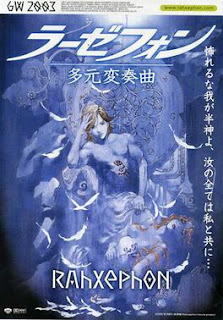
Anime: RahXephon - Pluralitas Concentio


Content Warning: Very brief nudity, older woman getting it on with a teen, some violence and blood.

I always find it weird when anime companies do this, the whole “hey, let’s chop down an OVA or series into a movie and release it so we can make more money!” I do not understand it at all. And you know what else they do? They usually change things so the plot is either way more simple or move things around to flow better. Wait a minute…

The movie starts us off with introducing the Haruka/Ayato young romance and all that, just right out the gate. And that her name is Mishima Haurka. Then we get to see her reaction to the Tokyo Jupiter event. After that, the movie starts roughly where the show does, but with a voice over explaining that he still remembers Mishima.

From here, two things happen: the new scenes (or edited scenes) start popping up and they start running us through the plot much, much faster. When Ayato goes for help, like he did the original TV show, he encounters the tank and all that, and then ends up in the subway, and has the encounter with the “government agents” and again is rescued by Haruka. This time, however, she drugs him and takes him with her as she tries to leave Tokyo. But, the RahXephon awakens and drags the plane down into the shrine. Here, Ayato boards the RahXephon for the first time and takes Haruka with him as he leaves the city. Outside, we see Tokyo Jupiter and the ruins of the world directly outside. Haruka fills Ayato in on what happened, the Mu invasion and all of that.

Soon, Haruka and Ayato are picked up and taken to the island, where Ayato becomes the pilot of the RahXephon in defense of humanity, but there’s not a lot of battles to be had. Seriously, there’s two fights and they’re chopped down to almost nothing. So, Ayato is taken back to Tokyo by one the Dorem and talks with his mother. And she’s really his mother this time, by the way. But she’s still not biologically Haruka’s aunt (thank goodness, but still, what the fuck, Japan?). And then Ayato saves Asahino, and leaves again. Since he wasn’t running away, he doesn’t have to face the music when he gets back, but he still ends up killing Asahino when she creates/controls the Dorem. However, at this point Ayato’s blue turns blue. And then Haruka sleeps with him! Yeah. She’s biologically in her 20’s and he’s biologically 17 or so, but they do the nasty. If it wasn’t for the age difference, I would be more on board for this, as they’re in love with each other and know who they really are in this version of the story. However, can we stop with this stuff, please?

After this, things get rolling quickly. We meet Quon, the sleeping beauty. She’s been waiting for Ayato to awaken her. And he does, with a kiss, and she goes to the Mu capital ship… Thing. Then, TERRA takes down the Tokyo Jupiter barrier and the war starts in earnest. There’s a huge battle against the forces of Mu on the high seas, and Ayato arrives in the RahXephon. He’s losing his memories, now that he has blue blood, but must “tune the world.” The leader of the Foundation thinks he’s going to tune it to what he wants, but due the intervention of Haruka, he doesn’t. Ayato’s RahXephon defeats Momaru’s Dorem, and then fights Quon’s RahXephon. During this battle, Haruka arrives and is killed. But she’s not gone yet. She’s able to get Ayato to reset things, kind of. The RahXephon can’t go back in time, but they can give them, Ayato and Haruka, their time back.

We then jump ahead 60 years and Haruka is reading “Through the Looking Glass” to her granddaughter, Reika (who is the Mishima Reika from the series). They talk about Reika’s grandfather, Ayato, who has passed away some time ago. Reika goes to get tea, and the old Haruka sees a young Ayato, and then vanishes.

And that’s where the movie ends. I have to say, I enjoyed this version of the story as much as the series. While the series gave us much more to experience, the movie distills it down, and edits things, to make a much more simple story. However, we don’t lose the same feeling of the story. It’s just different. I do prefer the end of the series, as it’s not as bittersweet, but I appreciate the movie’s ending for what it is.

When thinking about it, I believe that the movie was done the way it was because more women go to the theater in Japan and this movie is has a more feminine feeling to it. It isn’t about mecha and battles, not that the original was all that, but is more about the emotions and love. It takes the best part of the series, the relationship between Haruka and Ayato, and the time that was stolen from them, and makes it the focus of the story. No mystery about it, Ayato has always loved Haruka and she has never stopped loving him.

And now that I’m trying not to cry, I’m going to go now…

Rating: 3 out of 5
Suggestion: While lacking a lot of characters and depth, the emotional core has remained intact, and the story benefits from being condensed. 


Sunday, March 6, 2022

Music: Macross Plus - The Cream PUF

Content Warning: Some VERY sexually explicit lyrics

Welcome back to Mecha March and yet another entry under the “Music” heading. Now, finding the music from anime wasn’t very easy back in the day. Until file sharing programs and sites came around, you had to get music imported from Japan or hope that you lucked upon some in a Japanese book or movie store. I remember when Suncoast Movies had a whole rack of music from Macross Plus when the DVD came out. It was wild. And I was broke. So, piracy ensued. However, all these years later, I managed to track down this CD and give it a listen.

INFORMATION HIGH:

This is the first track and it is a song I have been obsessed with ever since I first heard it. While in English, there is some “Engrish” going on with the lyrics. Slow to build, the song picks up and just takes off. If you’re wondering, this is the song that plays while Isamu is trying to get through the defense barrier of Earth. However, the eight minute and five second length might be a bit much for some of you. For me, I could listen to it forever. I suppose it would be Trance? Electronica? I don’t know but I want more of it in my life.

Idol Talk:

This track is the one that causes the warning above. Why? Because there’s snip-its of actual phone sex in it. I’m not joking. You can clearly hear a woman with a British accent talking about sex and sexual acts, towards the end. It fades in and out during the start and end of the song but is covered by the rest of the music. Besides that, this is actually a really good track. The lyrics are in French, I believe and it has a very Pop sound, with a dash of Electronica, that just works for me. Can you believe that this came out in the 90s? Because I sure can, as it feels very Madonna influenced. Once again, there’s a bit of a slow build up to the faster part but when that switch it flipped, it’s great. This song plays during Sharon’s concert on Eden.

The Borderline:

Another song in English, I never knew what the name was because the singer’s accent made it hard to make it out. It makes sense, as the Japanese don’t really have an L or R sound, it’s something somewhere in between the two sounds. Anyway, after the faster songs so far, this one feels so nice and relaxing. But it’s also a bit sad, melancholy, really. I like this one, too. Hell, I like all the songs here but for different reasons. This one is just so… Wispy, soft, and ethereal (yes, I know I’m pretty much saying the same thing three times, get over it). It’s very clearly got a Jazz or perhaps Blues influence and it works. This song also plays during the first concert of Sharon Apple’s. If you really want to enjoy it, I suggest using headphones. Also, this is the shortest track on the album, coming in at five minutes and eighteen seconds.

SANTI-U:

You know what’s interesting about this song? I think it’s in Zentradi. Yeah, a made up language from the show. This song is really two but are one track. The beginning opens with that etherealness from the last track, with some soft singing and slow drums, making for a relaxing start. It’s slowly relaxing you and preparing you for what comes next. Halfway through the song, there’s what sounds like someone flipping through TV channels, followed by a test signal, and then the song changes. There’s this drum beat that slowly starts up and then gets louder and louder, faster and faster, and then it hits you with the Scat (like, the singing thing) and Trace beat. It builds, and builds, until the end, where it all just fades away like a dream. This is the last song from Sharon’s first concert. It’s interesting, because if you listen to the album on repeat, it’s like a circle that never ends. Or perhaps waves rising and falling, over and over again.

And with that terrible metaphor, I think it’s time to wrap up this review. There are two more soundtracks for Macross Plus out there. Both of them, and this one as well, are available on Spotify, should you want to give them a listen.

Rating: 5 out of 5
Suggestion: A great one, if short one. Oh, did I mention that the artist is credited as Sharon Apple? Because it is. And that’s neat.

The Flavors Of The Month